
Loading guide…
The best diapers across every need, ranked from our review data. One top pick each for overall, value, sensitive skin, eco, and overnight.
Somewhere between the hospital bag and the first real night at home, most parents realize they are about to make the same small decision thousands of times. Diapers are not glamorous, but they are constant, and getting them right buys you a calmer baby and a little less laundry.
The trouble is that every brand sounds like the best one, and the prices swing wildly for things that look nearly identical on the shelf. We built this guide to cut through that. We track ratings, the real price per diaper, and the verified specs that actually matter for a newborn's skin, then we tell you honestly what each one is good for.
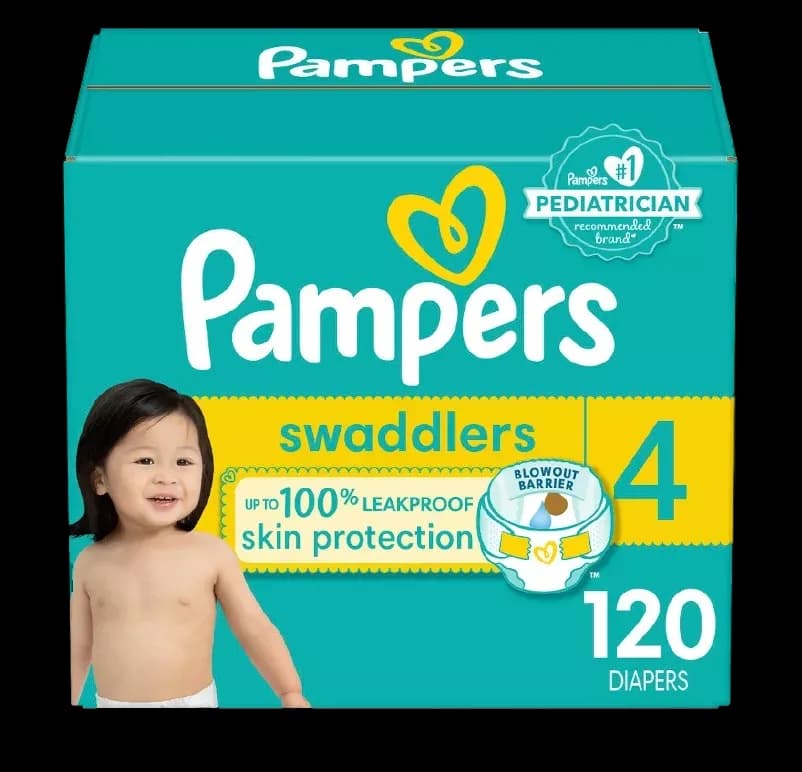
If you want the short version, our best overall pick is Pampers Swaddlers. It carries the highest rating we track and covers the widest range of sizes, from preemie all the way through size 8, so it can grow with your baby for a long time. It is soft, gentle on skin, and a safe default when you are not sure where to start.
That said, there is no single diaper that is perfect for every baby. Skin sensitivity, budget, body shape, and how heavily your baby wets all change the math. The five picks below cover the situations new parents ask us about most, and any one of them is a genuinely good choice.
Innovative diapers with enhanced leak protection and moisture-wicking features.
Not sure where to start? Tap what matters most to you and we'll point you to the pick that fits.
If you only remember one name from this guide, make it this one. Swaddlers earns the top spot because it pairs the highest rating we track with the most useful spec sheet for a newborn. It is hypoallergenic, chlorine-free, and paraben-free, so it is a sensible starting point even if you do not yet know how reactive your baby's skin will be. The blowout guards and wetness indicator are the small touches you come to rely on, the strip telling you whether a change is actually due before you fully wake up at night.
What really sets it apart is range. Swaddlers runs from preemie all the way to size 8, the widest span of any diaper here, which means you can keep buying the diaper you trust for years rather than re-learning a new brand every growth spurt. The honest trade-off is price. At about $0.43 per diaper it sits in the upper-middle of what we track, well above the budget picks. For many parents the consistency is worth it, but if every dollar counts, read the next entry first.
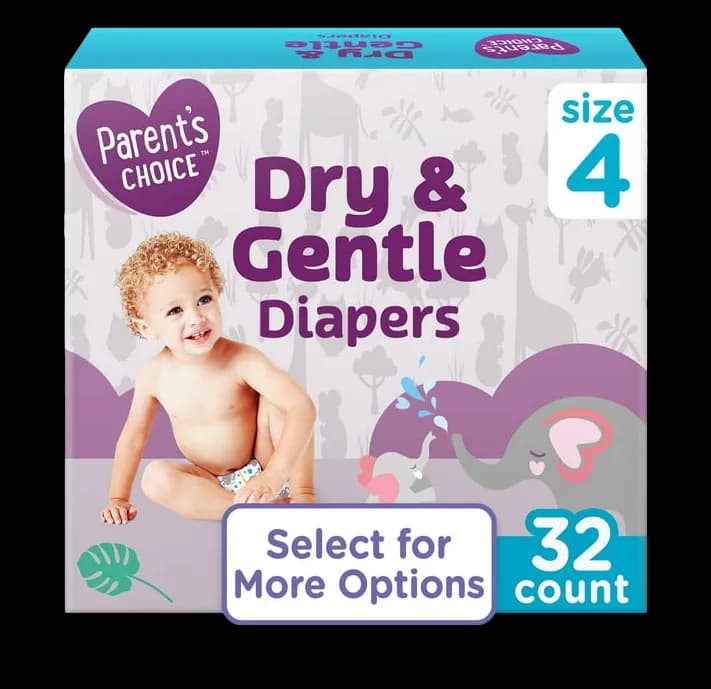
This is the pick that surprises people. Parent's Choice Dry & Gentle is Walmart's house brand and the cheapest diaper we track at roughly $0.16 each, yet it holds a 4.5 rating, which is not far off diapers that cost more than twice as much. For a newborn who can blow through ten or more diapers a day, that price gap adds up fast over a year.
It is fragrance-free, paraben-free, breathable, and absorbent, with a wetness indicator to help you time changes. It covers newborn through size 7, so it will carry most babies well past the first year. The trade-off is range, not quality: it does not go down to preemie or up to size 8, so very early or very large babies may need something else at the edges. For everyone in between, this is how you stretch a diaper budget without feeling like you compromised.
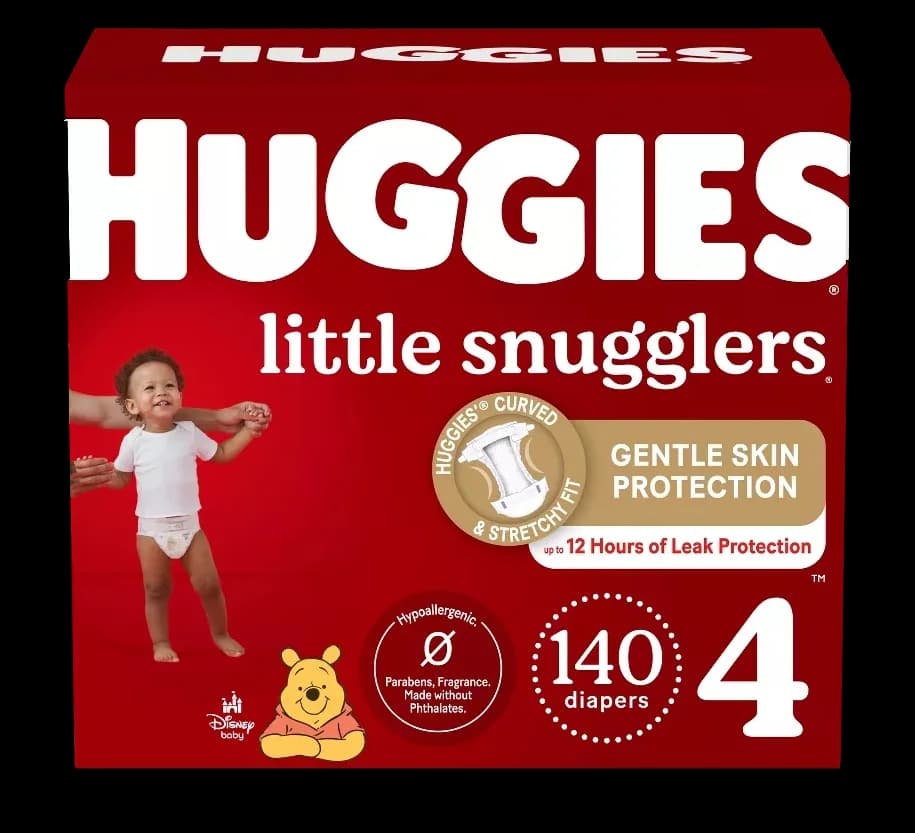
When a baby's skin reacts to everything, you want as few unknowns against it as possible. Little Snugglers is built around that. It is made with cotton and carries just about every skin-safety flag we look for: hypoallergenic, fragrance-free, chlorine-free, and paraben-free. Fewer added ingredients means fewer things that might irritate delicate newborn skin.
It does not stop at gentleness. You also get blowout guards, a wetness indicator, and a breathable, absorbent build, so you are not trading practicality for softness. It runs from preemie through size 6, which comfortably covers the newborn and infant months when skin tends to be fussiest. At about $0.37 per diaper it is reasonably priced for how much it offers. If your baby has had redness or you simply want to play it safe early on, this is an easy one to reach for.
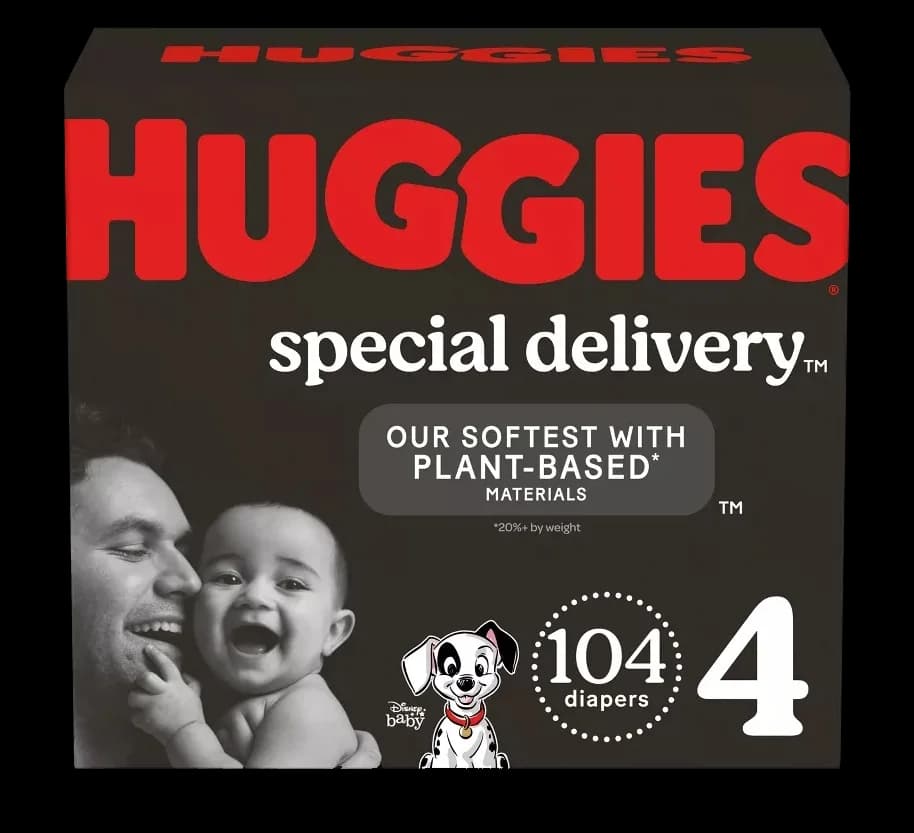
For parents who think about what touches their baby and what ends up in the bin, Special Delivery is the greenest option we track. Huggies makes it with plant-based materials and markets it as eco-friendly, and it does not ask you to give up the basics to get there. It is hypoallergenic, fragrance-free, chlorine-free, and paraben-free, with blowout guards, a wetness indicator, and a breathable design.
It covers newborn through size 6, which lines up well with the months most parents are most diaper-focused. The honest catch is cost. At about $0.54 per diaper it is the priciest pick in this guide, so think of it as a values choice rather than a savings one. If gentler materials matter to you and the budget has room, it delivers without making you compromise on skin safety.
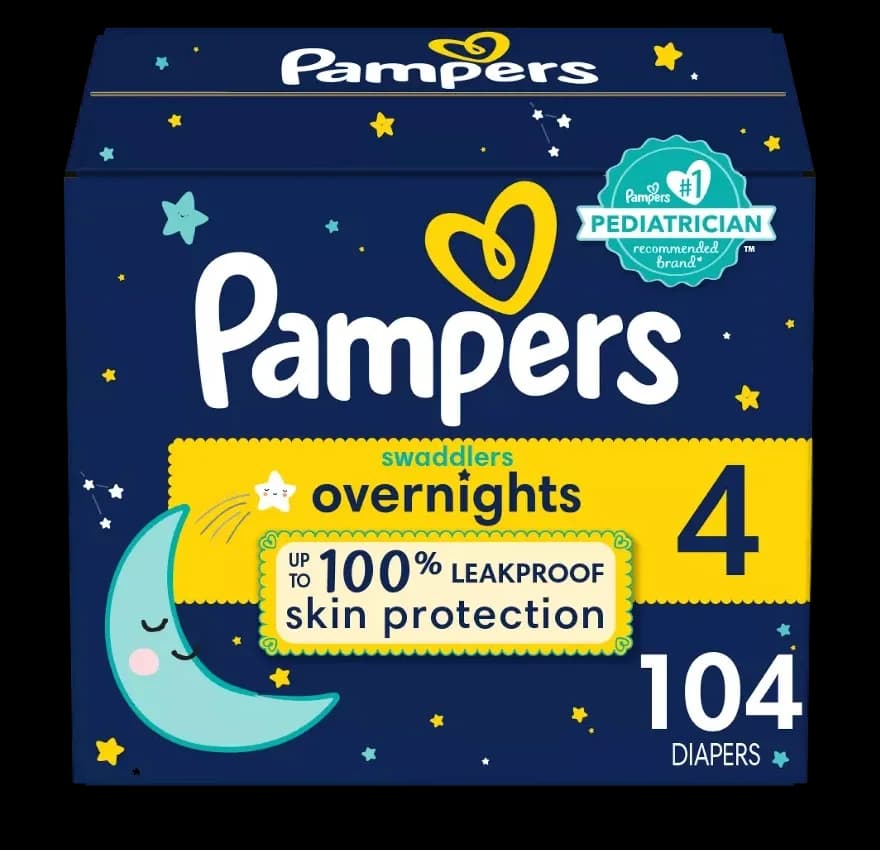
Daytime diapers and the overnight stretch are two different jobs. Swaddlers Overnights is purpose-built for the long haul between the last change at night and the first one in the morning. It is the overnight version of our top overall pick, so it shares the same gentle pedigree: hypoallergenic, paraben-free, breathable, and absorbent, with blowout guards and a wetness indicator.
It comes in sizes 3 through 7, so it is aimed at babies who have outgrown the smallest sizes and are sleeping longer stretches, which is exactly when a dedicated overnight diaper starts to earn its keep. At about $0.56 each it is a small splurge, but you are only using it once a day, so the nightly cost stays modest. If wet sheets and 5 a.m. wake-ups have become a pattern, this is the simplest fix to try first.
Start with your baby, not the brand. A newborn's skin is the first thing to consider, so if there is any history of sensitivity or you simply want to be cautious, favor diapers that are hypoallergenic and fragrance-free. Those flags will not guarantee a reaction-free month, but they remove some of the variables.
Then be realistic about money. Diapers are a recurring cost, and small differences in the per-diaper price compound into real numbers over a year. It is completely fine to mix and match: a budget diaper for daytime and a more specialized one overnight is a smart, common approach. Buy a small pack before you commit to a giant box, because fit and how your baby wets matter more than any review.
Finally, think about the season ahead. If your baby is sleeping longer at night, an overnight diaper can be worth the small premium. If your baby is growing fast, a brand with a wide size range saves you from switching every few months. Let the need pick the diaper.
We think you deserve to know exactly how these picks are made, because a recommendation is only as good as the reasoning behind it. So here is the honest version.
We do not run a lab, and we do not put diapers through wear tests. We are not weighing wet diapers or timing leaks with a stopwatch, and we will never pretend otherwise. What we do is gather the data that already exists and analyze it carefully and fairly, so you do not have to.
Three things drive every pick. The first is the overall rating, a signal of how the diaper has performed for the many families who have used it. The second is the real price per diaper, not the sticker price on a jumbo box, because the per-diaper cost is what actually hits your budget when you are changing ten a day. The third is the verified spec sheet: the skin-safety flags like hypoallergenic, fragrance-free, chlorine-free, and paraben-free; the leak features like blowout guards and wetness indicators; and the range of sizes a diaper covers.
We weigh those together against the specific need at hand. The best overall pick has to be strong across the board. The value pick has to keep its rating high while driving the price down. The sensitive-skin pick leans hardest on those skin-safety flags. We read every claim we can, we attribute manufacturer statements to the manufacturer, and when a feature is not confirmed for a product, we treat it as unknown rather than assuming the worst. The goal is simple: clear, honest analysis you can trust, so the time you save goes back to your baby instead of a comparison spreadsheet.
| Spec | PampersSwaddlers | HuggiesSnug & Dry | HuggiesLittle Movers | HuggiesLittle Snugglers |
|---|---|---|---|---|
| Price / diaper | $0.43 | $0.33 | $0.42 | $0.37 |
| Rating | 4.8 | 4.6 | 4.7 | 4.7 |
| Type | Everyday | Everyday | Everyday | Everyday |
| Material | — | polyester | — | cotton |
| Blowout guards | Yes | Yes | Yes | Yes |
| Wetness indicator | Yes | Yes | Yes | Yes |
| Hypoallergenic | Yes | Yes | Yes | Yes |
| Fragrance-free | No | Yes | Yes | Yes |
| Eco-friendly | No | No | No | No |
Of the diapers we track, Pampers Swaddlers is our best overall pick. It carries the highest rating we track, covers the widest size range from preemie through size 8, and includes gentle, skin-safe features like a hypoallergenic, chlorine-free, paraben-free build. It is a reliable default when you are not sure where to begin.
Not necessarily. Our cheapest pick, Parent's Choice Dry & Gentle at about $0.16 per diaper, still holds a 4.5 rating, while pricier diapers do not always rate dramatically higher. Price reflects materials, brand, and features as much as performance, so a higher cost is not a guarantee of a better diaper for your baby.
We point parents toward Huggies Little Snugglers. It is made with cotton and carries nearly every skin-safety flag we track: hypoallergenic, fragrance-free, chlorine-free, and paraben-free. Fewer added ingredients means fewer potential irritants against delicate skin. If sensitivity continues, it is always worth checking with your pediatrician.
It is a strip on the diaper that changes color when the diaper is wet, giving you a quick visual cue that a change may be due. It is a helpful convenience, especially overnight or with a sleeping baby, though it is no substitute for checking on your baby regularly.
It depends on what you value. Huggies Special Delivery, our eco-friendly pick, is made with plant-based materials and is hypoallergenic, fragrance-free, chlorine-free, and paraben-free, so you do not give up skin safety. The trade-off is cost: at about $0.54 per diaper it is the priciest pick here. If gentler materials matter to you and the budget allows, it is a solid choice.
Not for everyone, but it can help. If your baby is sleeping longer stretches and you are waking up to wet sheets, a dedicated overnight diaper like Pampers Swaddlers Overnights, made for sizes 3 through 7, is the simplest thing to try. Since you only use one per night, the cost stays modest.
Sizes are guided by your baby's weight, and the ranges on the package overlap, so there is no single perfect cutoff. A diaper that leaks often or leaves red marks is usually a sign to size up. Buy a small pack first so you can adjust without committing to a big box.
No, and we want to be upfront about that. We do not run lab or wear tests. Our picks come from honest analysis of the overall rating, the real price per diaper, and the verified specs for each product. Our job is to do that homework carefully so you can make a confident choice.
There is no trophy for buying the most expensive diaper, and there is no shame in buying the cheapest one that works. The best diaper is the one that fits your baby, keeps their skin happy, and fits your budget well enough that you are not stressed about the next box. Any pick in this guide is a sound starting point. Try one, watch how your baby does, and adjust from there. You are doing better than you think.
Still weighing it up? Browse all our diaper guides and diaper reviews whenever you're ready.