
Loading article…
What a swim diaper does, why it is different from a regular diaper, disposable versus reusable, and how to use one for a leak-free, worry-free pool day.
The first time you take a baby to the pool, the swim diaper question sneaks up on you. Can they just wear a regular diaper? Why is there a whole separate product? And do you really need it, or is it one more thing the baby industry invented to sell you?
The short answer is that you genuinely do need one, and the reason is simple physics. A regular diaper is built to absorb liquid, which is exactly the wrong job in a pool, where it swells into a heavy, sagging mess within minutes. A swim diaper does a completely different job: it contains solid waste while letting water pass through.
That difference is the whole point, and it explains everything about how swim diapers work and how to use them. Once you understand it, the rest, disposable or reusable, sizing, and the pool rules, falls into place quickly.
This guide explains what a swim diaper actually does, how it differs from the diaper your baby wears the rest of the day, and how to get a clean, leak-free pool day without the dreaded swim-area incident.
The key to understanding swim diapers is to realize they are built for one job and one job only: containing solid waste while a baby is in the water. They are not a smaller, water-resistant version of a regular diaper. They are a different tool entirely.
A swim diaper does not absorb urine, and it is not supposed to. If it did, it would balloon with pool water the instant your baby got in. Instead, urine simply passes through into the water, the same as it would for any swimmer, which is why a swim diaper feels thin and stays light even when wet.
What it does contain is the messy stuff, and that is the part that matters for everyone sharing the pool. A snug swim diaper holds solid waste in place rather than releasing it into the water, which is precisely what keeps a pool day from turning into a pool-clearing incident.
So when you put a swim diaper on, set the right expectation: it is doing its job perfectly even though it does not feel absorbent, because absorbency was never the goal. Containment of the messy kind is, and a good fit is what delivers it.
It is tempting to think a regular diaper would at least do the job in a pinch, but in water it fails in the worst possible way, doing neither thing you would want.
A regular diaper's whole design is to soak up liquid and lock it into a gel core. Submerge that in a pool and it does exactly what it was built to do: it absorbs water, fast. Within minutes it swells to several times its size, grows heavy, and sags off your baby. The gel material can break apart and leave a trail of little beads in the water.
Worse, all that swelling does not improve containment, it ruins it. A waterlogged, sagging diaper pulls away from the legs and waist, opening the very gaps that a swim diaper is designed to seal. So you get the heaviness and the mess and none of the protection.
This is why pools draw a hard line on it, and why the swim diaper exists as its own product. Save the regular diaper for before and after, put a fresh one on once your baby is dried off, and use the swim diaper only for the water itself.
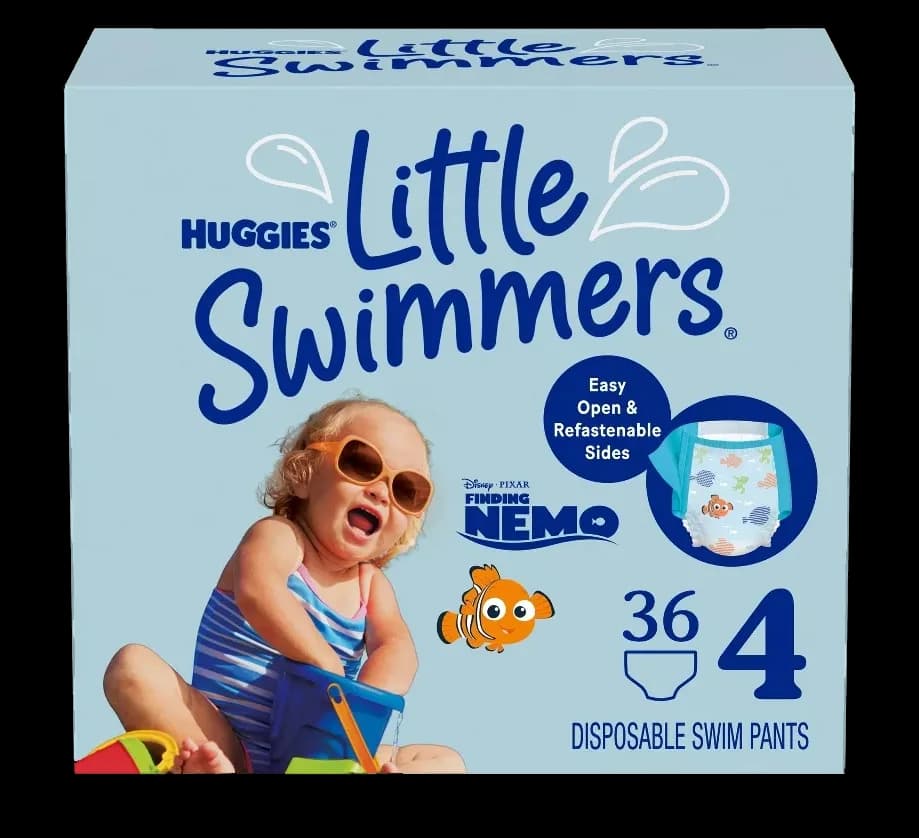
Once you know you need a swim diaper, the main choice is between disposable and reusable, and it comes down to how often you swim and what you value.
Disposable swim diapers work much like a regular diaper to put on, often with tear-away sides for easy removal of a messy one, and you throw them away after use. They are convenient for travel, vacations, and occasional pool or beach days, with no laundry to deal with. The trade-off is ongoing cost and waste if you swim often.
Reusable swim diapers are made of quick-drying fabric with snug elastic at the legs and waist, and you wash and reuse them. They cost more up front but nothing per swim after that, which makes them the economical and lower-waste choice for babies who swim regularly, like those in weekly swim lessons. Some double as swim bottoms, so your baby needs nothing over them.
Many families keep both: a reusable for the regular pool routine and a few disposables stashed in the bag for trips and surprises. Whichever you choose, the fit rules are the same, because with a swim diaper, fit is the entire game.
A diaper designed for the water that contains solid waste while letting urine and water pass through. It does not absorb, by design, so it stays light when wet.
A single-use swim diaper, often with tear-away sides, thrown away after use. Convenient for travel and occasional swims, with ongoing cost.
A washable, quick-drying swim diaper with snug elastic at the legs and waist. Higher cost up front, cheaper over time, and the lower-waste choice for regular swimmers.
The close fit at the legs and waist that lets a swim diaper contain a mess. With swim diapers, fit is the whole point, since there is no absorbent core to fall back on.
A swim diaper only works if it fits snugly, so a few habits make the difference between a relaxed pool day and a memorable incident.
Fit comes first. The leg openings and waist should be snug against the skin with no gaps, since those gaps are the only way solid waste escapes. A swim diaper that is too big defeats its own purpose, so size for a close fit, and check the legs the same way you would any diaper. Put the swim diaper on right before getting in, not an hour ahead, so it starts clean and dry.
Know the pool's rules, because most require a swim diaper for any child not reliably potty trained, and many require a reusable swim diaper or a swsuit with snug elastic over a disposable one. Signs near the pool usually spell it out, and lifeguards will too.
Finally, plan the changes. Take regular bathroom or change breaks, check the swim diaper often, and if there is a solid mess, get out and change immediately. Keep a regular diaper, a towel, and a change of clothes poolside so you can dry off and re-diaper the moment swim time ends. Handle those basics and pool days become the easy, joyful part of summer.
No, and they are not designed to. A swim diaper contains solid waste only; urine passes through into the water just as it would for any swimmer. If a swim diaper absorbed urine, it would swell with pool water and become heavy. That is why it feels thin and stays light even when wet, which is exactly how it should work.
No. A regular diaper is built to absorb liquid, so in water it swells to several times its size, gets heavy, sags off, and can shed gel beads into the pool, all while containing a mess worse than a swim diaper would. Pools ban them for this reason. Use a swim diaper in the water and a regular diaper before and after.
Disposable swim diapers are convenient for travel and occasional swims, with no laundry but an ongoing cost. Reusable ones cost more up front but nothing per swim, making them the economical, lower-waste choice for regular swimmers like babies in weekly lessons. Many families keep a reusable for routine swims and a few disposables in the bag for trips.
Snugly, with no gaps at the legs or waist, because that close fit is the only thing containing a solid mess. There is no absorbent core to fall back on, so fit is the entire point. Size for a close fit rather than room to grow, and check the leg openings the same way you would any diaper.
If any part of your baby will be in the water, including sitting in the shallow edge or a splash area, a swim diaper is the right call, and most facilities require it for babies regardless. If your baby is staying fully dry on a towel nearby, a regular diaper is fine, but bring the swim diaper in case they end up in the water.
Check it often and take regular breaks out of the water. Since swim diapers do not absorb, there is no wetness cue, so go by time and frequent checks rather than feel. If there is any solid mess, get out and change immediately to keep it contained. Keep a regular diaper, towel, and change of clothes poolside for when swim time ends.
A swim diaper does one job: it contains solid waste in the water while letting urine and water pass through, which is why it stays thin and why a regular diaper, built to absorb, fails badly in a pool. Choose disposable for occasional swims and reusable for regular ones, fit it snugly since fit is the whole game, and put it on just before getting in. Know your pool's rules, change promptly, and pool days become the easy joy of summer.
Shopping for one? See our Huggies Little Swimmers review and browse all diaper reviews.