
Loading article…
A plain-English glossary of diaper features, from blowout guards to wetness indicators, and which ones are actually worth caring about.
Stand in the diaper aisle for two minutes and you'll start to feel like you need a degree to buy something a baby is going to wet through in an hour. Every package promises something. Triple leak guards. A breathable layer. 360-degree stretch. A little line that turns blue. It reads like the spec sheet for a phone, not a thing you tuck around a tiny bottom.
Here's the calming truth: most of those features are variations on a handful of ideas, and only a few of them will actually change your day. The rest is marketing language stacked on top of a product that, frankly, all the major brands have gotten pretty good at making.
This guide walks through the features you'll see on the packaging and tells you, in plain words, what each one really does. We'll separate the things worth caring about from the things that are mostly nice-to-have, so you can shop by what matters to your baby instead of by whichever box has the most bullet points.
By the end you'll be able to glance at a package, find the two or three things that count, and put it in the cart without second-guessing yourself.
Diaper packaging is written to make you feel like more is better. Count the claims on a single bag and you might hit ten. But many of them describe the same part of the diaper from different angles, or name something every modern diaper already has.
Think of a diaper as having a few jobs: hold liquid, keep it from escaping at the legs and back, stay comfortable against the skin, and fit a wriggling body. Almost every feature on the box is just a brand's word for how it does one of those jobs.
So as you read this guide, keep a simple filter in mind. For each feature, ask: does this help with containment, comfort, fit, or skin? If it doesn't clearly do one of those, it probably isn't a reason to choose one diaper over another. The features that matter are the ones you'd notice if they were missing.
A raised barrier at the back waistband that blocks the up-the-back escape route newborn poop loves to take. Most useful in the early weeks, and only when the diaper fits snugly at the back.
A line on the front of the diaper that changes color (usually yellow to blue) when it's wet. Lets you check without unwrapping the baby. Handy early on and overnight, easy to live without later.
The soft ruffled edges around each leg. When they stand upright against the thighs, they keep liquid pooling inside the diaper instead of running down a leg. Flick them outward after fastening.
The padded middle that soaks up liquid and turns it into a gel, locking wetness away from the skin so the surface stays feeling drier between changes.
The outer layer that lets a little air pass through while holding liquid in. Better airflow means less of that warm, damp feeling that can irritate skin.
Fastening tabs that flex when pulled, so you can get a snug seal without the waistband feeling stiff. They matter more once your baby is wriggling and on the move.
This is the one most new parents care about most, and rightly so. The dreaded up-the-back blowout is a genuine rite of passage, usually arriving at the least convenient possible moment.
Two features do the heavy lifting here. Leg cuffs (sometimes called leak guards) are the soft ruffled edges around each leg. When they sit upright against your baby's thighs, they form a little barrier that keeps liquid pooling inside the diaper instead of running down a leg. Blowout guards, sometimes called a back or waist barrier, do the same job at the rear waistband, which is exactly where newborn poop likes to travel.
Here's the part the packaging won't tell you: these features only work if the diaper fits. A leg cuff that's tucked inward by mistake is an open door, so a quick habit of running a finger around each leg after fastening to flick the cuffs out will save you more messes than any premium feature. And a diaper that's too big gaps at the back no matter how many guards it advertises.
Newborn-focused diapers tend to make a point of their back protection, since blowouts peak in those first weeks. Pampers Swaddlers and Huggies Little Snugglers both lean into containment for that stage. But a well-fitted budget diaper will out-contain an expensive one that's the wrong size. Fit first, features second.
The wetness indicator is that thin yellow stripe down the front of the diaper that turns blue or green when it gets wet. It's a small bit of chemistry, and for new parents it's quietly one of the more useful things on the package.
In the early weeks, when you're tracking wet diapers to make sure feeding is going well and you're checking constantly anyway, a color change lets you peek without unwrapping a sleeping baby. Overnight it earns its keep too. You can tell at a glance whether a change is genuinely needed or whether you can let everyone keep sleeping.
That said, it's a convenience, not a necessity. Within a few weeks you'll know your baby's rhythm so well that you can mostly tell by feel and timing. Plenty of parents stop noticing the stripe entirely. It's a feature worth having if it comes with the diaper you already like, and not really worth paying a premium to chase.
Two features here shape how comfortable your baby actually feels in the diaper, and they pull in slightly different directions.
The absorbent core is the thick padded middle that soaks up liquid and locks it away from the skin. Modern cores use a gel-like material that turns wetness into a gel so it doesn't slosh back against the bottom. A good core keeps the surface feeling drier between changes, which matters most overnight and during long stretches out of the house. Every major brand does this competently now, so the real differences tend to show up in how long a diaper stays comfortable rather than whether it works at all.
The breathable cover is the outer layer that lets a little air move through while still holding liquid in. Better airflow means less of that warm, damp, trapped feeling against the skin, which can help with the redness and irritation that comes from a bottom staying humid for too long.
No cover replaces a timely change, though. The single best thing for your baby's skin is still getting them out of a wet or dirty diaper before it sits too long. Breathability buys comfort between changes. It doesn't extend how long a diaper should stay on.
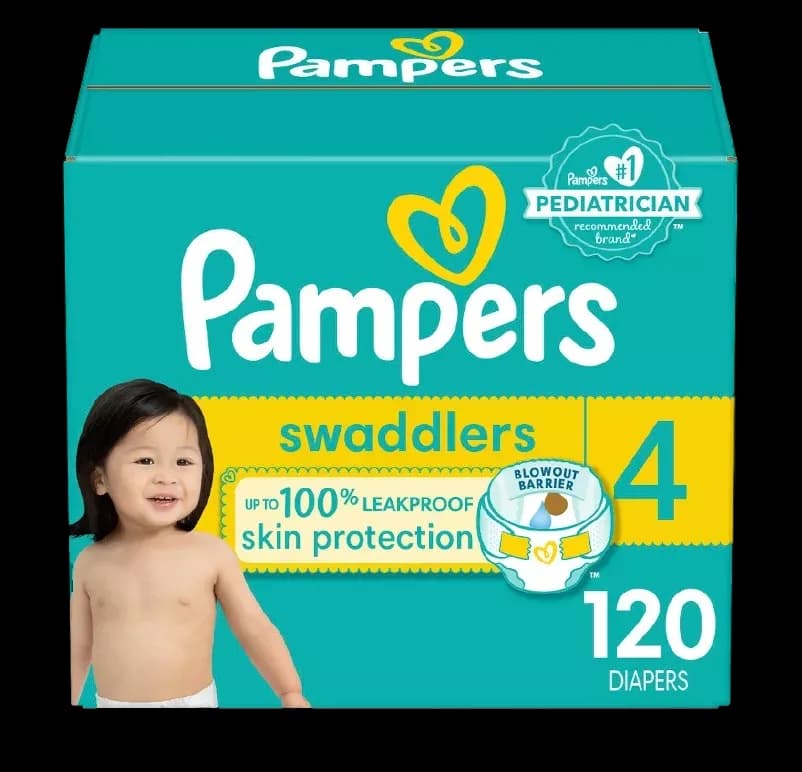
| Spec | PampersSwaddlers | HuggiesSnug & Dry | HuggiesLittle Movers | HuggiesLittle Snugglers |
|---|---|---|---|---|
| Price / diaper | $0.43 | $0.33 | $0.42 | $0.37 |
| Rating | 4.8 | 4.6 | 4.7 | 4.7 |
| Type | Everyday | Everyday | Everyday | Everyday |
| Material | — | polyester | — | cotton |
| Blowout guards | Yes | Yes | Yes | Yes |
| Wetness indicator | Yes | Yes | Yes | Yes |
| Hypoallergenic | Yes | Yes | Yes | Yes |
| Fragrance-free | No | Yes | Yes | Yes |
| Eco-friendly | No | No | No | No |
Fit features are the bits that help a diaper move with your baby instead of fighting them, and they matter a lot more once your baby starts to.
Stretch tabs are the fastening tabs that give a little when pulled, so you can snug the diaper without it feeling rigid. Stretchy or 360-degree waistbands flex around the whole tummy, which keeps a good seal whether your baby is lying flat, sitting up, or arching into a backbend mid-change. Refastenable tabs are the ones you can open and reclose a few times without them losing their grip, handy when you open up to check and find a false alarm.
For a sleepy newborn who mostly stays where you put them, these are nice but not essential. For a rolling, crawling, climbing baby, they're the difference between a diaper that stays put and one that twists into a gap. As your baby gets more mobile, fit features quietly become some of the most useful things on the package.
The labels about what a diaper is made of get a lot of attention, especially if your baby has sensitive skin or you're simply trying to be thoughtful about what sits against them all day. Here's what the common ones actually mean.
Fragrance-free means no added scent. Fragrance is one of the more common triggers for skin irritation, so fragrance-free is a sensible default for a baby prone to redness. Hypoallergenic is a softer claim: it means the product is formulated to be less likely to cause an allergic reaction. It's a helpful signal, not a guarantee, since any skin can react to anything.
Chlorine-free (you'll also see "elemental chlorine-free" or "totally chlorine-free") refers to how the wood pulp was whitened, using a gentler process than older chlorine bleaching. Plant-based means some portion of the materials comes from renewable plant sources rather than petroleum. Both can matter to you on comfort or environmental grounds, though neither is a measure of how well the diaper performs.
If your baby's skin is happy, you don't need to overthink any of this. If you're seeing persistent redness or rash that doesn't clear up with regular changes and a barrier cream, that's worth a quick word with your pediatrician rather than just swapping brands and hoping.
Blowout guards are a raised barrier at the back waistband of the diaper, designed to stop poop from traveling up your baby's back. They matter most in the newborn weeks when blowouts peak, and they only do their job when the diaper fits snugly at the back rather than gapping.
No, but it's a nice convenience. The color-changing line lets you check a diaper without unwrapping your baby, which is genuinely helpful in the early weeks and overnight. After a few weeks you'll usually know by feel and timing, and many parents stop noticing the stripe altogether. It's worth having if it comes with a diaper you like, not worth paying extra to chase.
It means the diaper is formulated to be less likely to cause an allergic reaction, often by leaving out common irritants like added fragrance. It's a helpful signal if your baby has sensitive skin, but it's not a guarantee, since any skin can react to anything. If you see persistent redness, it's worth checking with your pediatrician rather than just switching brands.
The absorbent core is the thick padded middle of the diaper. It soaks up liquid and turns it into a gel so it doesn't slosh back against the skin, keeping the surface feeling drier between changes. Every major brand does this well, so the differences tend to show up in comfort over long stretches rather than in whether it works at all.
Not really. Most features are variations on a few core jobs: containment, comfort, fit, and skin care. A long list of claims doesn't beat the basics done well. A well-fitting, gentle diaper in the right size will serve your baby better than a feature-packed one that doesn't fit.
They're usually two names for the same thing: the soft ruffled edges around each leg that pool liquid inside the diaper instead of letting it run down a leg. Brands use different words for them. What matters is that they stand upright against the thighs, so flick them outward after every change.
It can help a little. A breathable outer layer lets some air move through, which reduces the warm, damp feeling that contributes to redness and irritation. It's not a cure, though. The most effective thing for your baby's skin is still changing wet or dirty diapers before they sit too long, plus a barrier cream when needed.
Fragrance-free means no added scent. Since fragrance is a common trigger for skin irritation, fragrance-free is a sensible default for babies prone to redness or with sensitive skin. If your baby's skin is happy with a scented diaper, there's no need to switch, but fragrance-free is an easy, low-risk choice when in doubt.
You don't need to decode every word on the package. Find the few things that matter for your baby right now, good containment and the right size in the early weeks, comfortable breathable materials if skin is sensitive, and stretchier fit once they're on the move, and let the rest be background noise. The big brands all make a capable diaper. The real skill is matching the diaper to your baby, not the longest list of features to your cart.
See these features in context across our diaper reviews and buying guides.